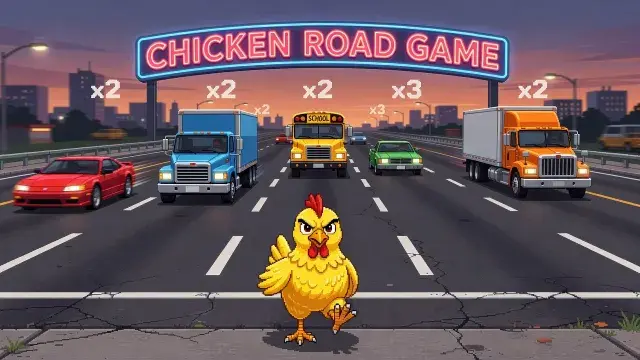
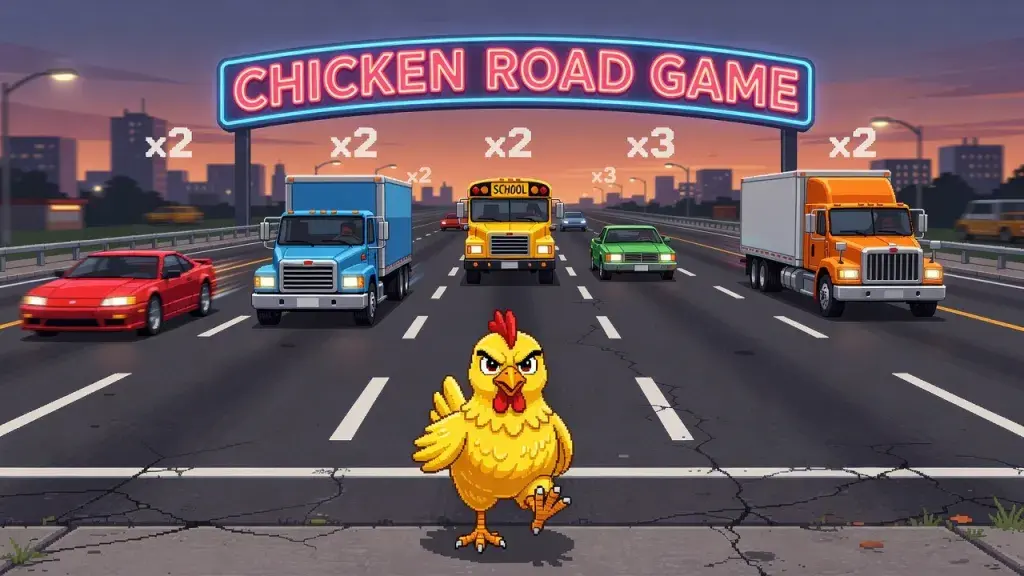
A chicken with a single job - reach the other side without dying - has outlasted arcade fads, mobile app trends, and entire console generations. The formula behind the chicken crossing road game hasn't changed much since its earliest iterations: dodge, time your moves, survive. What has changed is how many platforms now host variations of it, and how many players discover the concept for the first time without knowing why it works so well.
The appeal isn't accidental. Strip away the graphics and sound effects, and you're left with a pure decision-making loop: move or wait, and each choice carries consequences. That simplicity is exactly why the format has been adapted into betting-style and reflex-based versions found online. For players trying to understand the mechanics before risking anything, a detailed breakdown like the chicken road game rules guide can clarify how timing and risk interact before real money enters the picture. Once the core loop clicks, the rest of the experience becomes far more intuitive.
This piece breaks down exactly how the game functions - from its objective and control scheme to the specific rules governing road crossings - so you can approach it with a clear strategy instead of guesswork.
What Is the Chicken Crossing Road Game?
Origins and Core Concept
The chicken crossing road game traces its lineage to classic arcade titles built around lane-based obstacle avoidance. A character - traditionally a chicken - must cross a series of hazardous lanes, usually roads filled with moving traffic, to reach a safe zone on the opposite side. The premise sounds almost too simple to sustain long-term engagement, yet it has proven remarkably durable across decades of gaming evolution.
Why the Format Still Works
Part of the staying power comes from how the game balances predictability and randomness. Traffic patterns follow enough logic that players can learn timing, but enough variation exists that no two crossings feel identical. This tension between skill and unpredictability keeps the experience mentally engaging rather than repetitive.
Modern Variations
Contemporary versions have branched into two broad categories: casual arcade-style games focused purely on reflexes, and wager-based versions where each successful lane crossed increases a potential payout multiplier. Both share the same foundational mechanic, but the stakes and pacing differ significantly depending on which type you're playing.
Chicken Road Game Objective
The Primary Goal
At its heart, the chicken road game objective is straightforward: guide the chicken across a hazardous stretch of road without being struck by an obstacle, typically a vehicle. Reaching the far side represents a completed run, while failure to do so - through miscalculated timing or hesitation - ends the attempt immediately.
Scoring and Progression
In arcade-style formats, scoring is usually tied to distance covered or the number of lanes successfully crossed. In wager-based formats, the objective shifts slightly: each lane crossed without incident increases a multiplier attached to the player's stake, and the true goal becomes deciding when to stop and secure winnings versus pushing further for a larger reward.
Risk Versus Reward
This is where the objective becomes genuinely strategic rather than purely reflexive. Advancing another lane might double your potential payout, but it also doubles your exposure to failure. Understanding this trade-off is central to playing the game well, regardless of which version you're engaging with.
Chicken Road Game How to Play
Setting Up a Round
Most versions begin with a simple setup screen where the player either selects a starting wager (in betting variants) or simply presses start (in arcade variants). The chicken is placed at the edge of the first lane, with the road stretching ahead in a grid of sequential lanes, each carrying its own moving hazard.
Executing a Successful Crossing
Once the round begins, the player watches the pattern of oncoming traffic and times each forward movement to avoid collision. Successful crossings typically require anticipating gaps rather than reacting to them, since reaction time alone is rarely fast enough once a vehicle is already close.
Common Mistakes Beginners Make
New players tend to fall into two failure patterns: moving too early because a gap looks safe when it isn't fully clear, or hesitating too long and missing a genuine opportunity. Learning to read the rhythm of traffic - rather than the position of a single vehicle - solves both problems over time.
- Rushing forward without confirming the next lane is clear
- Freezing mid-lane out of caution, which often increases risk rather than reducing it
- Ignoring visual cues that signal an approaching hazard's speed
- Failing to adjust strategy as difficulty increases with each successive lane
Chicken Road Game Controls
Standard Input Methods
Chicken road game controls are intentionally minimal, which is part of the design's accessibility. On most platforms, a single directional input - a tap, click, or arrow key press - moves the chicken forward by one lane. There's rarely a need for lateral movement, since the challenge is built around forward timing rather than dodging sideways.
Mobile Versus Desktop Input
On mobile devices, a simple screen tap typically triggers forward movement, while desktop versions often map the same action to the spacebar or an arrow key. Some wager-based versions include an additional "cash out" button, allowing players to lock in their current multiplier without attempting the next lane.
Adjusting for Precision
Because timing is everything, control responsiveness matters more than complexity. A slight input delay on a poorly optimized platform can turn an otherwise well-timed move into a failed crossing. Players who take the format seriously often prefer desktop or well-tested app versions specifically because of tighter input response.
Road Crossing Chicken Rules
Lane-by-Lane Mechanics
The road crossing chicken rules generally follow a consistent structure: each lane presents an independent hazard, and clearing one lane does not guarantee safety in the next. Difficulty typically escalates as the chicken advances, with traffic speed or density increasing the further it travels from the starting point.
Collision and Failure Conditions
A collision with any obstacle ends the run instantly in almost every version of the game. There's no partial damage system or health bar - one mistake is final, which is precisely what makes each decision to advance feel weighted rather than casual.
Special Rule Variations
Some versions introduce additional rules, such as bonus lanes offering higher rewards but greater risk, or safe zones where the chicken can pause without needing to time a movement. These variations don't change the fundamental logic of the game, but they do require players to adapt their reading of the road on a case-by-case basis.
Strategy Tips for Better Runs
Reading Patterns Instead of Reacting
Experienced players stop watching individual vehicles and instead study the overall rhythm of a lane before committing to a move. This shift from reactive to predictive thinking is the single biggest factor separating consistent performers from players who struggle to progress past the early lanes.
Managing Risk in Wager-Based Versions
For versions tied to real stakes, discipline matters more than reflexes. Setting a personal cutoff point - a specific multiplier at which you'll cash out regardless of how tempting further progress looks - prevents the common trap of losing accumulated gains on a single overreaching attempt.
Practicing Without Pressure
Free or demo versions of the chicken crossing road game offer a low-stakes way to internalize timing before attempting a version with real consequences. Spending time here builds the pattern recognition that later translates directly into more confident, less hesitant decision-making.
Frequently Asked Questions
Is the chicken road game based on luck or skill?
Both play a role. Traffic timing requires genuine skill to read and anticipate, but the underlying pattern generation in wager-based versions includes an element of randomness that no amount of practice can fully eliminate.
Can I pause mid-lane to wait for a better opportunity?
In most versions, yes - remaining stationary within a lane is allowed as long as you're not standing directly in a hazard's path. However, some faster-paced variants penalize hesitation by increasing risk the longer you remain in one position.
Do all versions of the game involve real money?
No. Many versions exist purely as arcade-style entertainment with no wagering component at all. Betting variants are a separate category built on the same core mechanic but with financial stakes attached to each successful crossing.
What happens if I collide with an obstacle?
The run ends immediately in nearly every version. There's no recovery mechanic or extra life system built into the standard format, which is part of what keeps each attempt tense from start to finish.
Are the controls different between mobile and desktop versions?
The core input - a single forward movement command - stays the same, but the physical method changes. Mobile players tap the screen, while desktop players typically use a key press, and some versions offer a separate button for cashing out early.
How do I improve my success rate over time?
Focus on recognizing traffic rhythm rather than reacting to individual vehicles, and practice in a low-pressure demo mode before attempting versions with real stakes. Consistency in timing improves far faster through repeated exposure than through trying to calculate each move analytically.