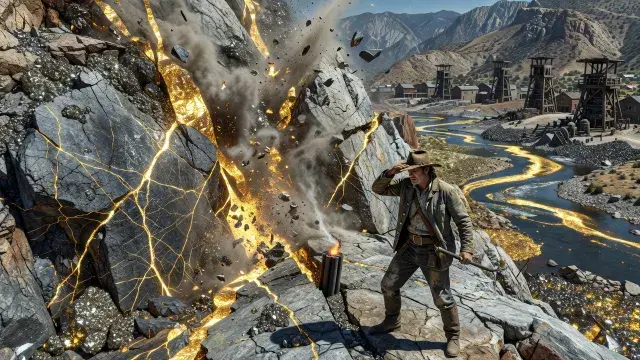
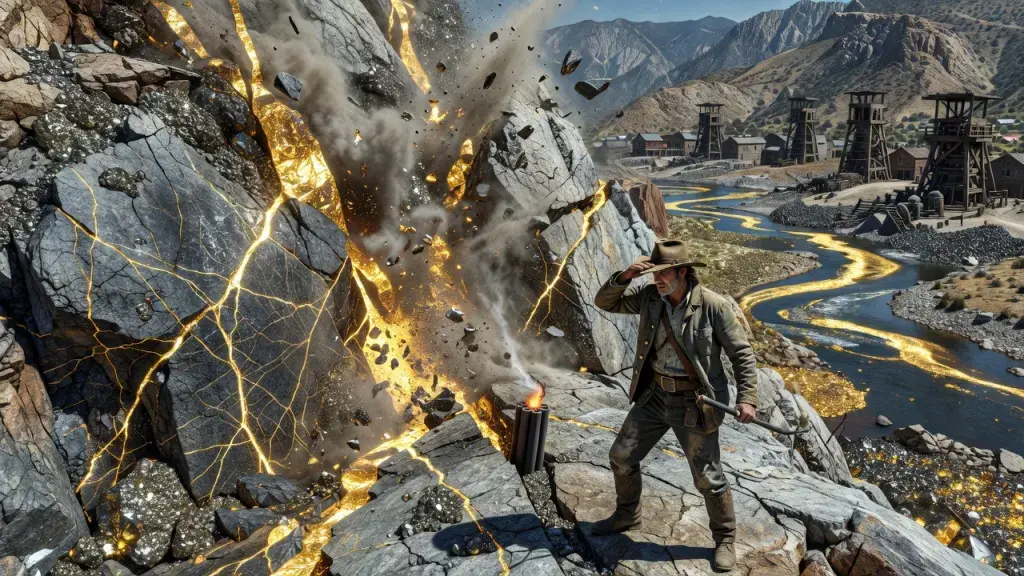
A single blast of dynamite can expose in seconds what nature spent millions of years concealing. That moment of rupture - rock splitting to reveal a streak of glittering ore - has defined prospecting folklore for over a century, and it still shapes how geologists and hobbyists alike think about buried wealth. The phrase "striking it rich" wasn't born from luck alone. It came from a deep, technical understanding of how ore bodies form, where they cluster, and what visual and structural clues separate a modest deposit from a genuine mother lode.
What makes this subject endlessly fascinating is the tension between chance and method. Behind every legendary strike sits a pattern: rock formations, mineral veins, and geological pressure points that repeat across continents and centuries. Even popular culture has picked up on this appeal - enthusiasts exploring themed entertainment can see it reflected in dynamite riches the mother lode features, where the imagery of explosive discovery and hidden treasure draws directly from real mining history. Between the romanticized version of prospecting and the technical reality, there's a rich body of geological knowledge worth unpacking.
This piece breaks down how mining discoveries actually happen, what ore vein characteristics tell trained eyes about underlying wealth, and why understanding mineral wealth potential remains as relevant today as it was during the gold rush era.
The Legacy of Explosive Discovery: Why "Dynamite Riches" Still Resonates
The term "dynamite riches" evokes a specific era of mining history - one where technology finally caught up with ambition. Before controlled explosives became standard, miners relied on hand tools, black powder, and sheer physical labor to break through rock. Alfred Nobel's invention of dynamite in 1867 changed the economics of extraction entirely. Suddenly, veins buried behind dense granite or quartz became accessible at a fraction of the previous cost and time.
From Black Powder to Modern Blasting
Early prospectors depended on gunpowder, which was unstable, weak in penetrating power, and dangerous to transport over rough terrain. Dynamite's stability and controlled detonation force gave mining operations a new level of precision. Instead of guessing where a vein might run, engineers could follow a deposit's trajectory with calculated blasts, minimizing waste rock and maximizing ore recovery.
How Explosive Mining Reshaped Boomtowns
Towns across Nevada, Colorado, and California grew almost overnight once dynamite allowed deeper and faster extraction. Mines that had been considered exhausted using older methods suddenly yielded fresh ore once blasting opened deeper chambers. The psychological effect mattered too - the loud, visible drama of a blast becoming a strike created a cultural symbol of instant fortune that persists in the phrase "dynamite riches" today.
The Symbolic Power of the "Big Strike"
Beyond the technical shift, dynamite riches became shorthand for transformative luck - the idea that a single explosive moment could turn a struggling claim into a fortune. That symbolism still echoes in modern storytelling, gaming, and media that reference mining history as a metaphor for sudden wealth.
Understanding Mother Lode Features in Geological Terms
The "mother lode" isn't a myth - it's a specific geological phenomenon. Originally referring to a major gold-bearing quartz vein system in California's Sierra Nevada foothills, the term now applies broadly to any primary, high-concentration source vein from which smaller, secondary deposits branch out.
What Defines a True Mother Lode
A genuine mother lode typically features a dominant vein or vein system with unusually high mineral concentration, often surrounded by a network of smaller veins called "leaders" or "stringers." These secondary veins act almost like tributaries feeding from a main river - smaller in volume but chemically linked to the primary source.
Historical Examples and Their Lasting Influence
The original Mother Lode belt in California stretched roughly 120 miles and became the backbone of the 1849 gold rush economy. Its influence went beyond gold output - it established the geological vocabulary still used by mining engineers worldwide when describing dominant vein systems.
Identifying Mother Lode Indicators in the Field
- Consistent vein thickness over extended horizontal or vertical distance
- Visible mineralization density higher than surrounding host rock
- Presence of associated indicator minerals such as pyrite or quartz banding
- Structural continuity across multiple exposed rock faces
These markers help geologists distinguish a true mother lode from an isolated pocket deposit that may look promising on the surface but lacks depth or continuity.
How Mining Discoveries Happen: From Surface Clues to Underground Confirmation
Every significant mining discovery follows a logical progression, even when it appears accidental to outsiders. Surface indicators guide early exploration, but confirmation requires systematic underground or subsurface investigation.
Surface Prospecting Techniques
Panning, sluicing, and visual rock inspection remain foundational, especially for placer deposits where erosion has already separated heavy minerals from host rock. Prospectors look for color changes, unusual rock hardness, and mineral staining that suggest a vein lies close to the surface.
Geophysical and Geochemical Survey Methods
Modern exploration relies heavily on magnetic surveys, electrical resistivity testing, and soil geochemistry sampling. These methods detect anomalies invisible to the naked eye - density shifts, conductivity changes, or trace element concentrations that hint at buried mineralization long before any drilling begins.
Drilling and Core Sampling for Confirmation
Once surface data suggests a promising target, diamond drilling extracts core samples that reveal the vein's actual composition, depth, and continuity. This step separates speculative mining discoveries from confirmed, economically viable deposits.
The Role of Luck Versus Systematic Exploration
While dramatic accidental finds make better stories, the overwhelming majority of productive discoveries today result from years of methodical survey work. Luck still plays a role in timing and access, but the underlying process is disciplined and data-driven rather than random.
Reading Ore Vein Characteristics: What the Rock Actually Tells You
Not all veins are created equal, and learning to read their physical characteristics separates casual observers from experienced geologists. Vein structure, mineral association, and host rock behavior all provide clues about what lies deeper.
Vein Width, Depth, and Orientation
Wider veins generally suggest greater mineral volume, but width alone doesn't guarantee value - grade matters just as much as size. Orientation also matters: veins running parallel to major fault lines often continue for greater distances, while irregular, pinched veins may terminate abruptly.
Mineral Composition and Grade Indicators
The presence of specific accessory minerals often signals proximity to higher-grade ore. Quartz veining frequently accompanies gold deposits, while sulfide minerals like galena or sphalerite often indicate silver or zinc-rich zones. Color banding within a vein can also reflect changing mineral concentrations at different depths.
Host Rock Behavior and Structural Control
The rock surrounding a vein - the host rock - influences how minerals were deposited in the first place. Fractured, permeable rock allows mineral-rich fluids to migrate and concentrate over geological time, while dense, impermeable rock tends to restrict vein formation to narrow fracture zones.
Common Misreadings That Mislead Prospectors
- Mistaking pyrite ("fool's gold") for actual gold due to surface shine
- Assuming vein width near the surface predicts consistent depth
- Overestimating grade based on visual color alone without assay testing
Avoiding these mistakes requires laboratory assay confirmation rather than relying solely on visual inspection, no matter how experienced the observer.
Assessing Mineral Wealth Potential: From Discovery to Economic Viability
Finding ore is only the first step. Turning a discovery into a functioning, profitable operation requires evaluating whether the mineral wealth potential justifies the cost of extraction.
Grade Versus Volume: The Core Economic Equation
A deposit with extremely high grade but low volume may be less valuable overall than a lower-grade deposit with massive tonnage. Mining economics hinges on total recoverable value, not just concentration percentage, which is why comprehensive sampling across the entire vein system matters more than isolated high-grade pockets.
Extraction Costs and Accessibility Factors
Remote locations, deep vein placement, and complex ore chemistry all increase extraction costs. A deposit sitting near existing infrastructure with shallow, easily processed ore can outperform a richer but less accessible find in terms of actual profitability.
Environmental and Regulatory Considerations
Modern mineral wealth assessments must also account for environmental impact studies, water usage permits, and land reclamation obligations. These factors, largely absent from historical dynamite-era mining, now significantly influence whether a discovery moves from exploration to full-scale production.
Lessons From History: What Past Discoveries Teach Modern Prospectors
Historical mining booms offer more than nostalgia - they provide a working case study in how geological theory meets practical extraction.
Patterns That Repeat Across Major Gold Rushes
From California to the Klondike to South Africa's Witwatersrand basin, successful rushes shared common traits: proximity to major fault systems, quartz-rich host rock, and river systems that concentrated placer deposits downstream from primary veins.
Technological Shifts That Changed Discovery Rates
Each major advance - from dynamite to hydraulic mining to modern geophysical surveying - opened previously inaccessible deposits. Technology consistently expands what counts as an economically viable mineral wealth potential, turning yesterday's marginal find into today's profitable operation.
What Modern Geologists Still Apply From Historical Methods
Despite advanced tools, modern exploration still relies on the same foundational logic historical prospectors used: follow the structural trend, test the vein's continuity, and never assume surface appearance reflects the full picture underground.
Frequently Asked Questions
What exactly is a mother lode, and how is it different from a regular ore deposit?
A mother lode is the primary, high-concentration vein system from which smaller secondary veins branch off. Regular ore deposits may be isolated pockets without this structural continuity, meaning their long-term extraction potential is typically far more limited.
Can surface indicators alone confirm a valuable mineral discovery?
No. Surface indicators such as staining, color, or visible mineralization only suggest potential. Laboratory assay testing and core sampling are required to confirm actual grade, depth, and economic viability before any serious investment decision is made.
Why did dynamite have such a large impact on mining history?
Dynamite allowed miners to access ore trapped behind dense rock formations far faster and more safely than earlier explosives like black powder. This precision made previously unprofitable or inaccessible veins commercially viable almost overnight.
How do geologists determine if a vein is worth pursuing economically?
They weigh grade against total volume, factor in extraction costs based on depth and location, and account for regulatory or environmental obligations. A high-grade vein in a remote, hard-to-access area may be less viable than a lower-grade deposit near existing infrastructure.
Are modern mining discoveries still based on luck, or is it purely scientific now?
Modern discoveries rely primarily on systematic geophysical surveys, geochemical sampling, and structural mapping. Luck still influences timing and land access, but the identification process itself is data-driven rather than accidental.
What accessory minerals typically indicate a nearby high-value vein?
Quartz banding often accompanies gold deposits, while sulfide minerals like galena and sphalerite frequently signal silver or zinc-rich zones. These indicators guide exploration but always require assay confirmation before being treated as reliable evidence of grade.